TABLE
A New Provençal Table - How Six Kitchens Are Carrying a Regional Cuisine Forward
By Monica D. Royce
SEPTEMBER 2026
There are many ways to recognise Provence on a plate. Sometimes it is immediate: garlic worked into a generous aïoli, a bowl of Camargue rice, chickpeas, grilled fish, a tomato at the height of summer. Elsewhere, the connection is quieter. It might begin with vegetables gathered from a garden that morning, herbs growing beneath olive trees, an old recipe remembered by a neighbour, or an ingredient so transformed by technique that its origins reveal themselves only in the tasting.
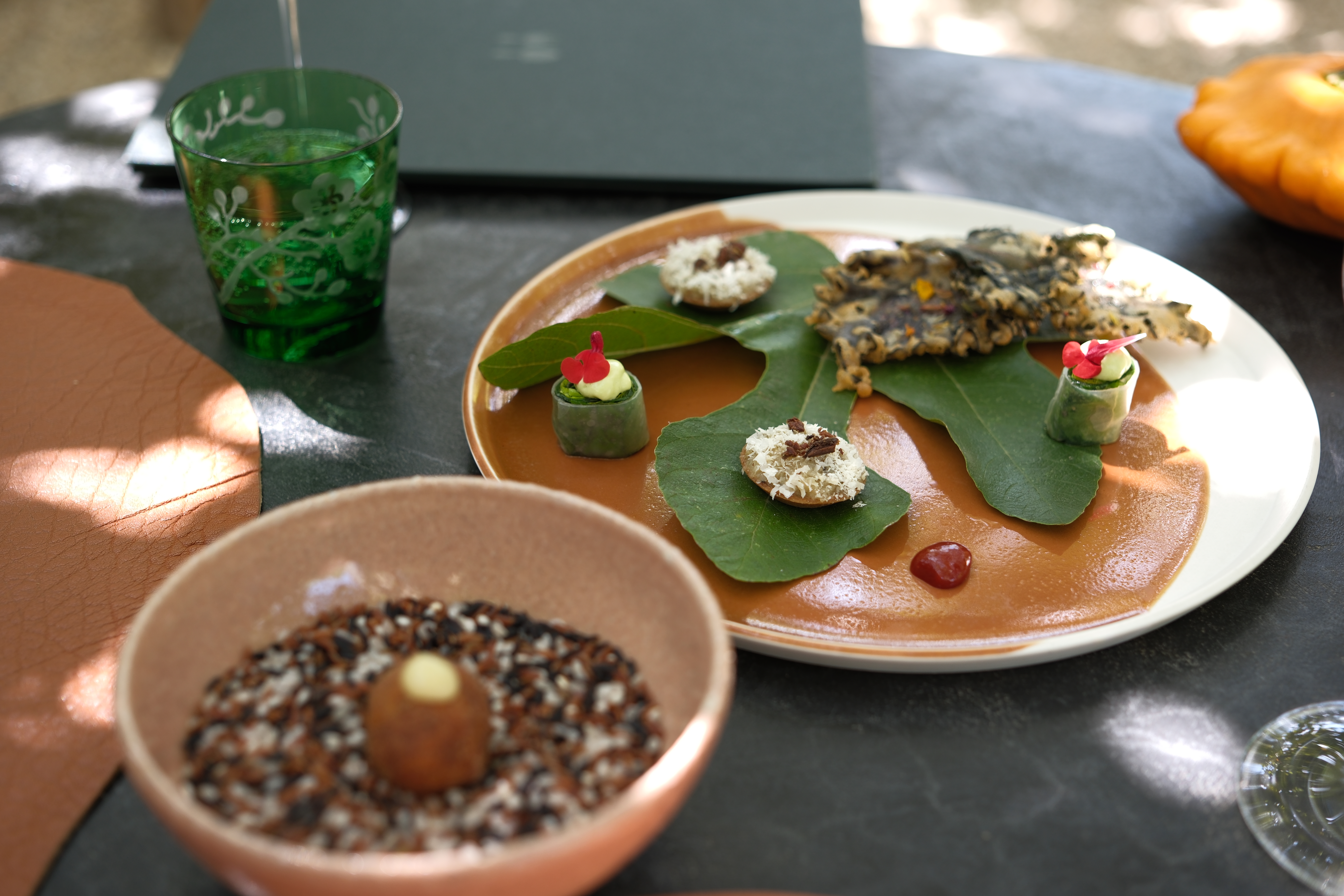
Garden-led amuse-bouches at La Chassagnette, where vegetables, herbs and flowers shape Armand Arnal’s cooking.
Across six very different kitchens — Le Seize in Arles, La Chassagnette in the Camargue, Edù in Saint-Rémy-de-Provence, Le Relais du Castelet in Fontvieille, and Les Galinas and Étude in Aix-en-Provence — a picture emerges of Provençal cooking in motion.
Each approaches the region from a different direction. There is the recovery of disappearing dishes at Les Galinas; Armand Arnal’s extraordinary vegetable garden at La Chassagnette; the inherited land of Le Relais du Castelet; the easy Mediterranean sociability of Edù; the young, increasingly assured cooking of Le Seize; and the highly personal, technically accomplished world Loïc Pétri has created at Étude.
Together, they reveal the vitality of a cuisine whose traditions continue to be cultivated, remembered and reinterpreted.
A cuisine shaped by the land
Provençal cooking has always been inseparable from its geography. The sea, the dry interior, the Rhône delta, the limestone hills and fertile pockets of cultivated land produced different ways of eating, yet the same ingredients return again and again: olive oil, garlic and aromatic herbs; anchovies and sardines; chickpeas and other pulses; bread, almonds and figs; lamb and goat; vegetables grown close to the house.
From these ingredients came a cuisine of remarkable resourcefulness.
Aïgo boulido turned garlic, sage, olive oil, egg and bread into a restorative soup. Fishermen made bouillabaisse from their catch. Ratatouille gathered together the vegetables available in summer. Aïoli accompanied fish, vegetables, eggs and whatever else the household had at hand. Soupe au pistou followed the contents of the garden.
The recipes travelled from household to household and changed along the way. Their character came as much from an instinct — seasonality, thrift, generosity, making full use of what was available — as from a precise list of ingredients.
The great written record arrived towards the end of the nineteenth century. In 1897, Marseille-based chef Jean-Baptiste Reboul published La Cuisinière Provençale, assembling more than a thousand recipes into what became a defining reference for the region’s domestic cooking. Frédéric Mistral, the poet and great defender of Provençal language and culture, later encouraged Reboul to include the Provençal names of the dishes. Food had become part of the effort to record the identity of a region undergoing profound change.
More than a century later, those recipes remain part of the vocabulary. So do the older instincts that produced them. In some of Provence’s most interesting kitchens today, they are being expressed in strikingly different ways.
Tradition remembered
On a small street in the old centre of Aix-en-Provence, Les Galinas has made memory its subject.
The restaurant was opened in 2023 by three friends — chef Florent Mondejar, Florent Sonnery and Mathieu Castelbou — with a determination to cook the food that Provençal families once ate at home. Aïgo boulido and aïgo sau appear alongside daube, lamb tripe in tomato sauce, soupe au pistou, monkfish with raïto and aïoli.
Their own description is beautifully succinct: “Nous faisons une cuisine d’interprète, pas d’auteur” — the cooking of an interpreter rather than an author.
There is nothing nostalgic about the room. It has the energy of a young enterprise, with an alert, passionate team and a strong sense of purpose. The food carries the familiarity of home cooking, handled with precision. A plate of grilled octopus has the directness of something remembered from childhood. The aïoli is superb — fresh, generous and deeply satisfying, the sort of dish that explains its longevity in a single mouthful.
The restaurant has also become an unexpected repository for local knowledge. Residents and teachers of Provençal arrive with recipes, old books and stories, adding their memories to those already circulating through the kitchen.
Tradition here remains communal. It passes from one person to another, from memory to kitchen, from kitchen to table.
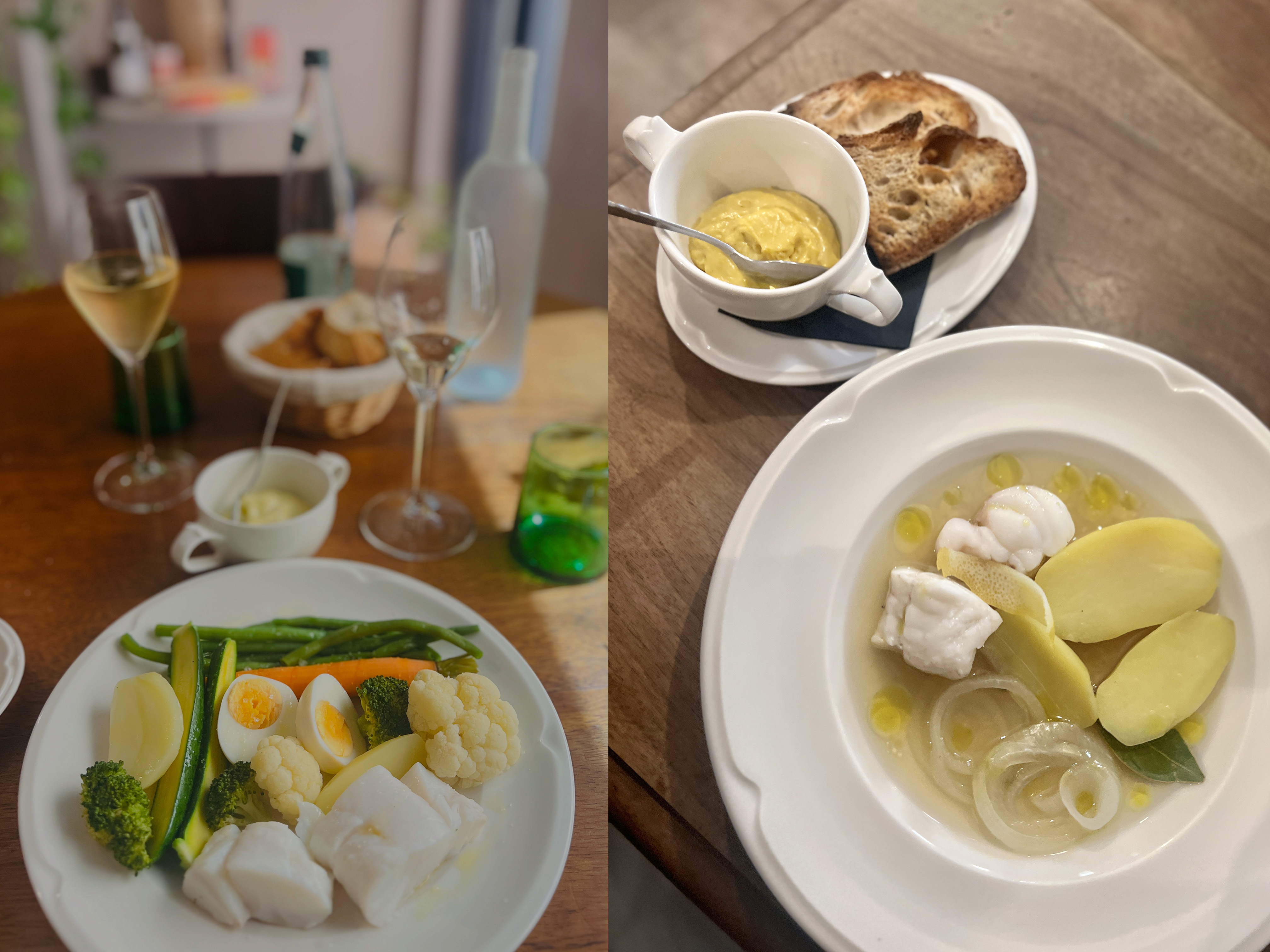
At Les Galinas, Provençal tradition is served with conviction: a generous aïoli alongside aïgo sau de baudroie, the old fisherman’s broth prepared here with monkfish and rouille.
The garden as beginning
Thirty kilometres away, surrounded by the flat horizons of the Camargue, La Chassagnette begins from the soil.
Armand Arnal has cooked here since 2006, developing one of the most distinctive relationships between garden and kitchen in Provence. Three hectares are cultivated organically with more than 200 varieties, and the harvest determines the rhythm of the menu. Arnal puts it simply: “Here, our garden rules our creativity.”
To walk through it before eating is to understand the restaurant differently. It is luxuriant, dense and wonderfully unruly, a profusion of leaves, herbs, vegetables, flowers and fruit. What appears on the plate is its concentrated expression.
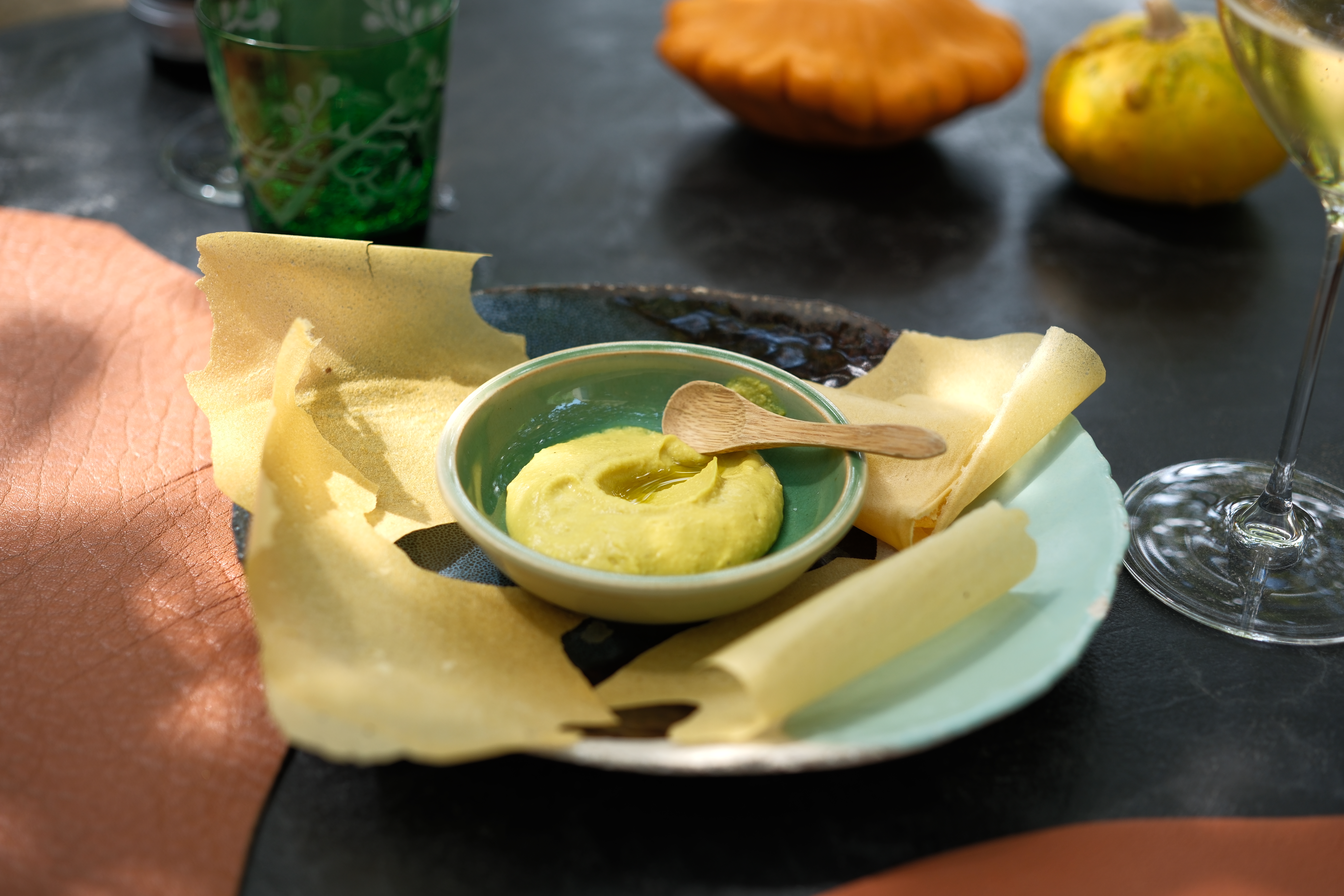
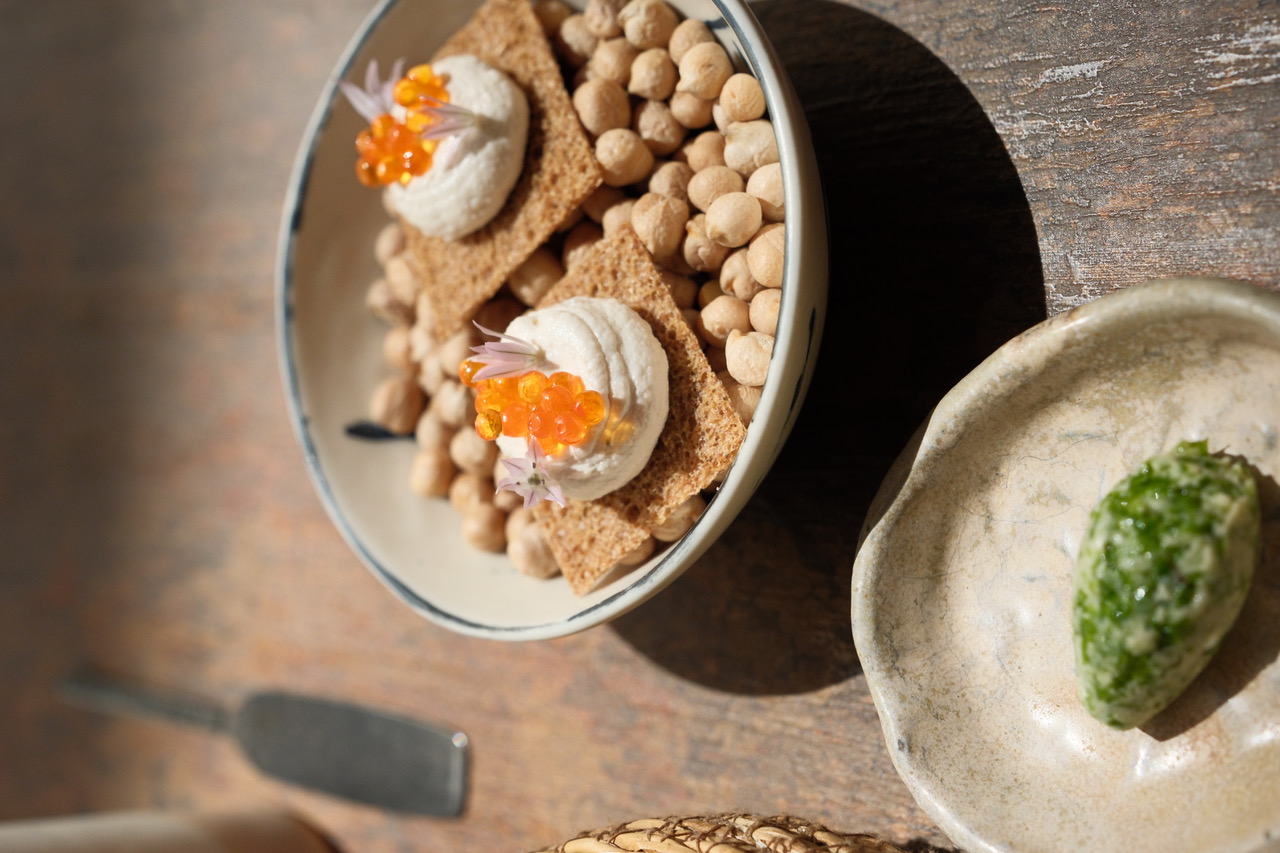
A bright, lemony hummus with crisp potato shards opens the meal at La Chassagnette — a simple beginning shaped by freshness, texture and the garden-led spirit of the kitchen.
A preparation of green herbs and vegetables, somewhere between sorbet and soup, can seem almost elemental. Elsewhere, fish is accompanied by vegetal milks, herbs, seaweed or broths. A tian may appear beside red mullet; bouillabaisse is distilled into a jus, carrying the memory of the dish without reproducing its familiar form.
Arnal’s relationship with food began long before La Chassagnette. Growing up in Montpellier, he spent hours around the Saint-Roch market, where his grandparents worked; his great-grandmother was remembered as the doyenne of the market. His career later took him through the kitchens of Pierre Hermé and Alain Ducasse and to New York before the Camargue became his home.
That combination — childhood memory, sophisticated technique and an intense attention to what is growing now — has defined La Chassagnette for two decades. The garden provides the language. The kitchen gives it form.
Inherited ground
At Le Relais du Castelet, near Fontvieille, the connection to the landscape is more intimate still.
Jean-Baptiste Bert cooks on his family property, surrounded by the agricultural landscape of the Alpilles. The restaurant draws heavily from its potager, its aromatic herbs and nearby producers; its olive oil carries the AOP Vallée des Baux-de-Provence. Asparagus comes from Barbegal, sheep’s-milk yoghurt and tomme from Mas Reynaud.
The setting is modest and relaxed, and the food can be unexpectedly playful.
Blettes grow beneath the olive trees and arrive crisp and deep-fried. Sardines, potatoes under a vivid herbal sauce, aubergines with figs: the combinations feel spontaneous, guided by what the garden and season offer. In another register, a peach can be paired with salted almond, pistachio and fig leaf, accompanied by an ice cream scented with smoked Crau hay.
The sophistication lies lightly over the ingredients.
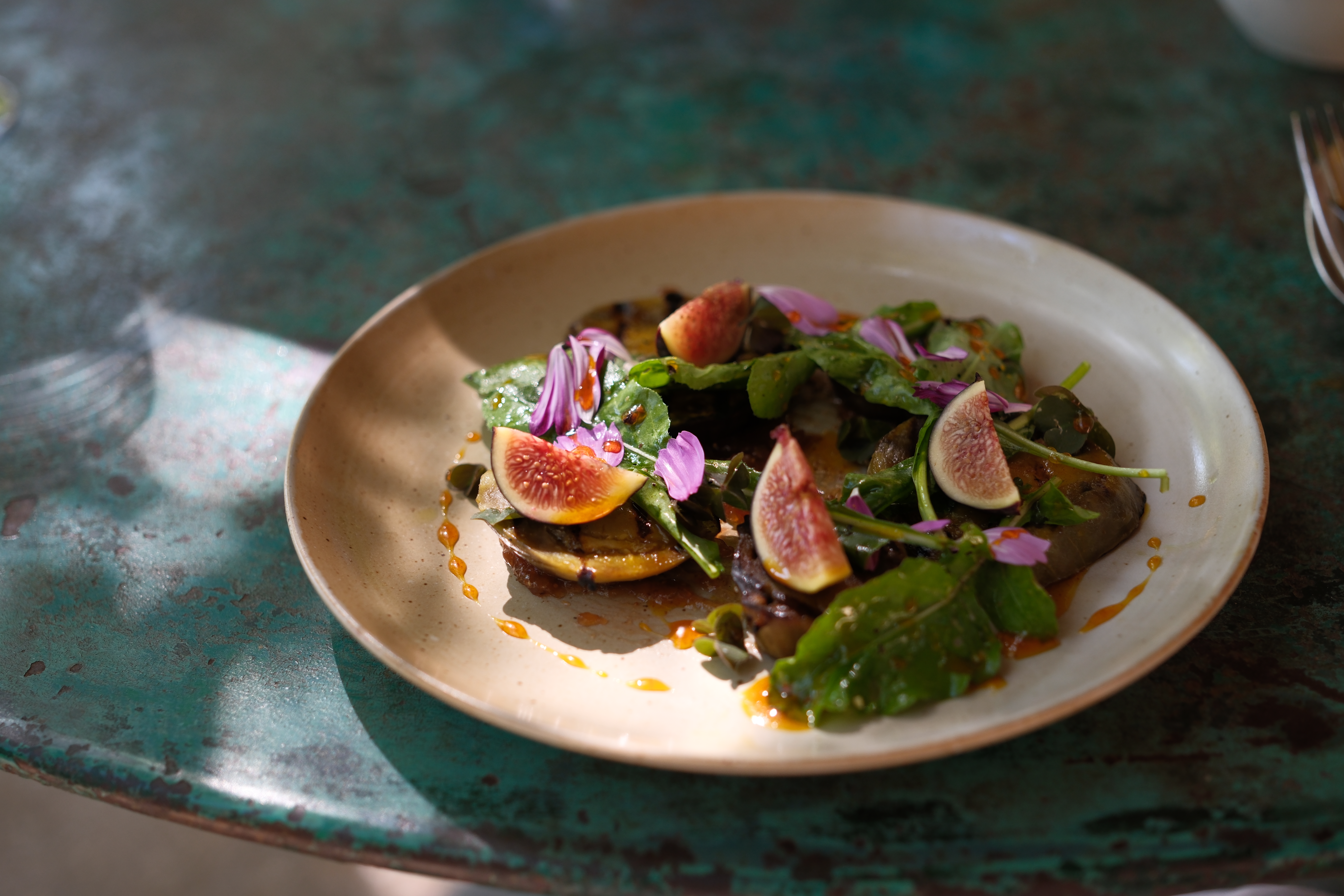
Roasted aubergines, fresh figs and herbs at Le Relais du Castelet — Provence at summer’s end.
Castelet has the energy of a kitchen still moving forward, experimenting with the possibilities of its surroundings. Its greatest resource is already there: the land itself, familiar enough to be taken for granted and rich enough to keep suggesting another idea.
An open Mediterranean
At Edù, on the edge of Saint-Rémy-de-Provence, food belongs above all to the table.
Set in a former plant nursery among cypresses, arbours and greenery, the restaurant was originally created by Marseille chef Édouard Giribone and is now run by Caroline and Guilhem Baillaud, who have carried its relaxed Mediterranean identity forward. It has the ease of a place that has become part of local life. Regulars are greeted with the warmth of friends arriving for lunch. Plates are shared. The atmosphere is casual and generous; people settle in.
Its cooking moves comfortably around the Mediterranean: marinated fish, panisses, mussels, grilled vegetables, sardines and wood-fired pizzettes. The restaurant describes its cuisine as “méditerranéenne et pas que provençale” — Mediterranean, and not only Provençal.
A particularly memorable plate of Camargue rice cooked in a broth of crab and fish captures that identity beautifully. The rice belongs unmistakably to the Rhône delta; the spirit of the dish could travel much farther around the Mediterranean.
That openness has deep roots in the region. Marseille has spent more than two millennia absorbing people, ingredients and cooking traditions through its port. Greek settlement, Ligurian and Italian connections and later waves of migration from across the Mediterranean left their traces in the local food. Pistou has its conversation with Ligurian pesto; socca with farinata; chickpea preparations, fish soups, olive oil and garlic cross modern borders with ease.
At Edù, this wider Mediterranean inheritance feels effortless. Its strongest quality is conviviality: food designed to be eaten together, in a place people want to return to.
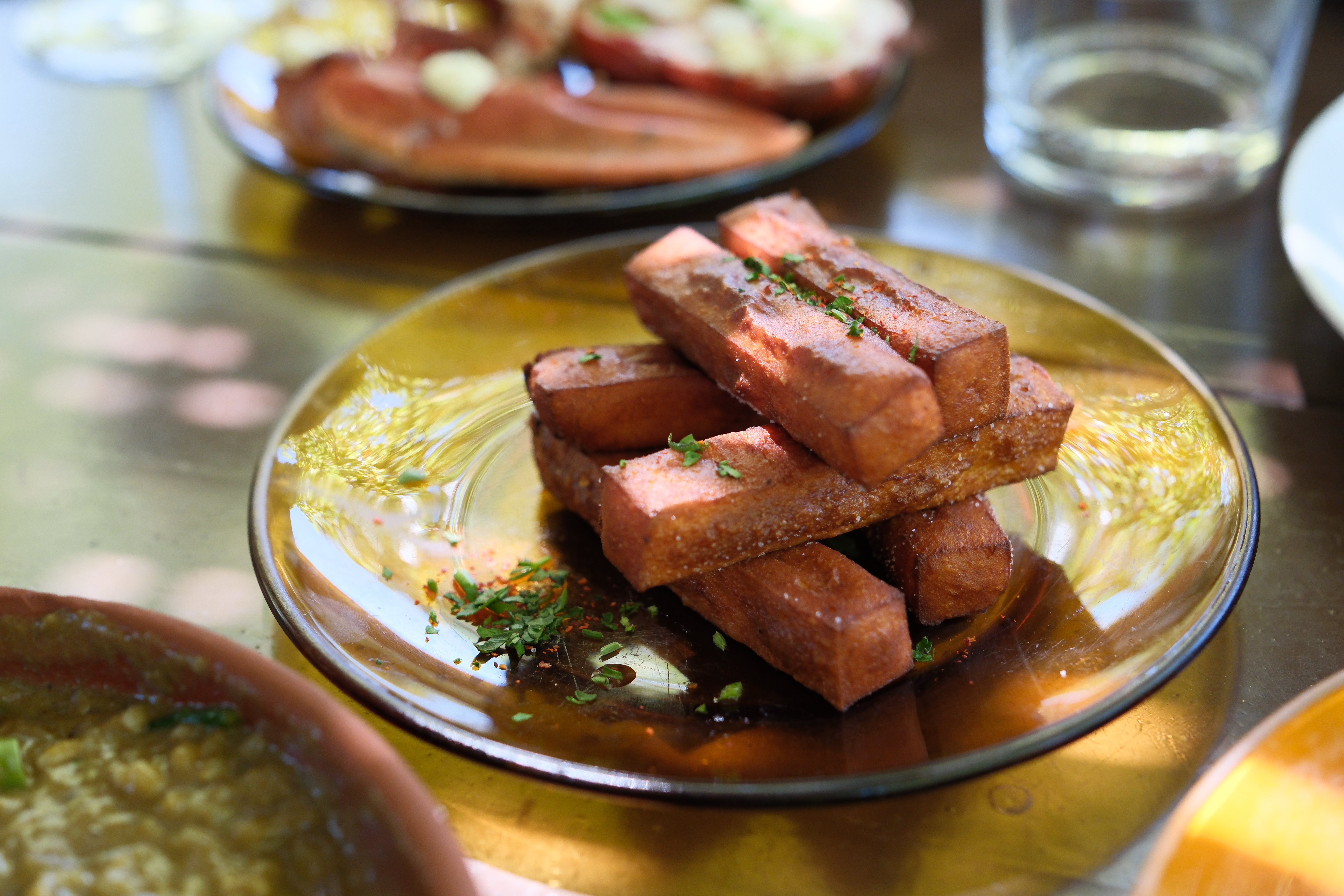
Marseille-style panisses at Edù — a simple chickpea classic that speaks to Provence’s wider Mediterranean roots.
Finding a language of one’s own
Le Seize, tucked into a narrow street in old Arles, belongs to another generation of small, ambitious restaurants.
Sarah and Julien Richard opened it in 2023 after years spent working in restaurants around France. Julien’s career took him through Cap-Ferrat, Burgundy, the Basque coast and Châteauneuf-du-Pape; Sarah, originally from Arles, also worked in kitchens and dining rooms across the country. Their return gave them something they had been searching for professionally: the freedom to cook on their own terms.
The restaurant is quiet and unshowy. Its cooking is considered, technically skilled and still developing its own vocabulary.
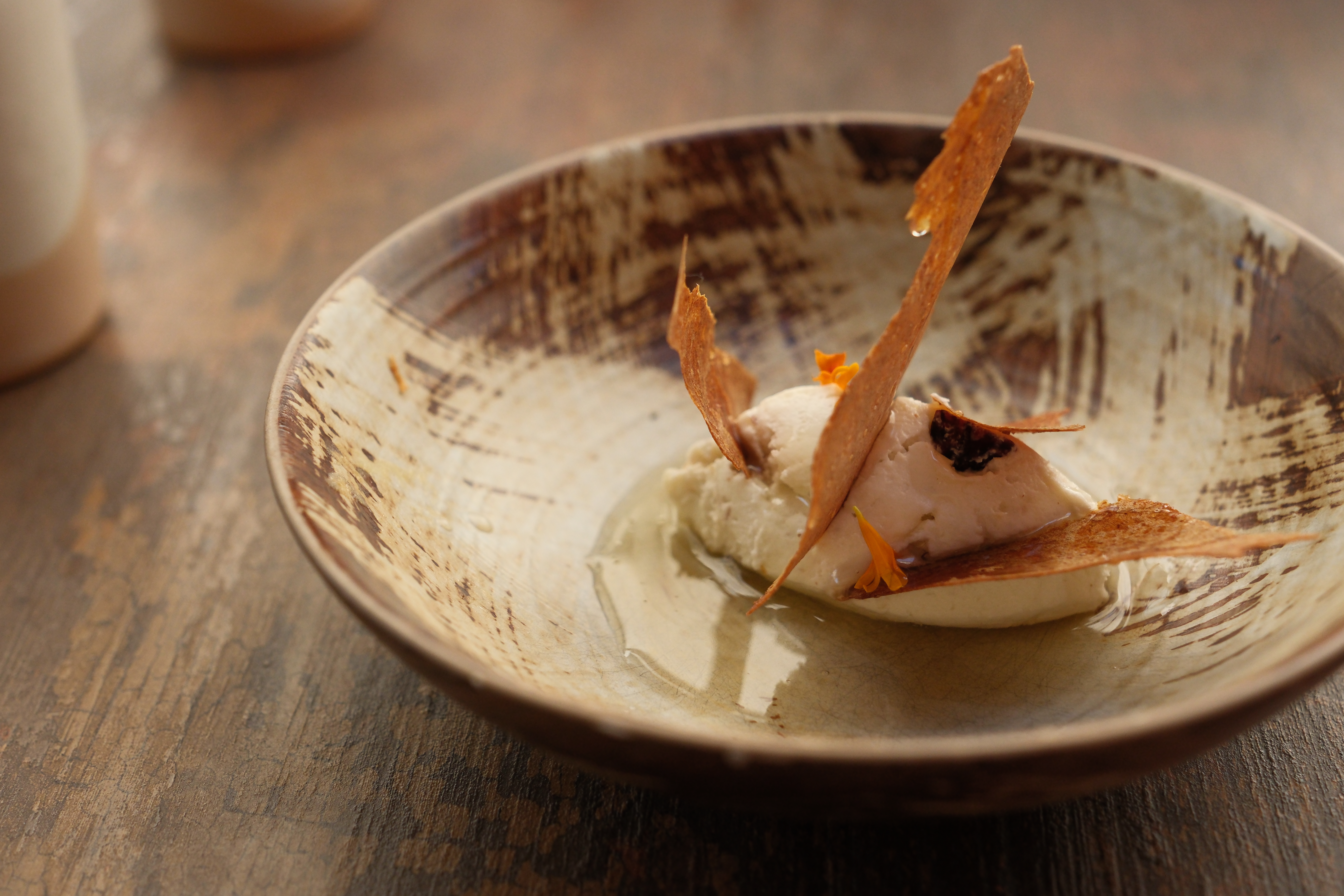
At Le Seize, goat’s cheese is reimagined as dessert — a familiar Provençal ingredient given an unexpected new form.
The regional references are present: chickpeas, socca, Camargue rice, Alpilles lamb, Mediterranean fish, herbs and flowers from the kitchen garden. Yet the combinations belong very much to the present. Chickpeas come with lemon and basil; Camargue rice with fennel and fish-soup jus; tomato can be confited with vanilla oil and lime.
There is pleasure in watching a young kitchen find its voice. A sea-bass stew in broth, or an unexpectedly careful treatment of the humble chickpea, reveals chefs interested in the possibilities of familiar ingredients.
At Le Seize, Provence becomes material for a new culinary language.
The author enters the kitchen
In Aix, Étude takes personal expression furthest.
Its chef, Loïc Pétri, grew up in Provence in a family of Greek and Italian origin. Food was part of the daily language of the household. He remembers looking from his bedroom towards his grandmother’s dining room and watching her cook. Professional life then carried him into some of Paris’s most demanding kitchens — Michel Roth, Joël Robuchon, Jean-François Piège and Éric Briffard — before he returned south.
His tiny restaurant began as Sauvage in 2019, became Étude in 2024 and received a Michelin star the following year. With around a dozen seats and no conventional brigade of waiters, the cooks finish the plates and bring them directly into the dining room.
Pétri’s cooking is precise, cerebral and unmistakably personal. Fish may be matured; sea and land appear together; oils, spices and chillies are handled with confidence. A sea bass with mussels carries little visual reference to a traditional Provençal plate. Its connection to the region is carried through the chef himself: the market, the Mediterranean, family memory, ingredients and the experience accumulated elsewhere before coming home.
Pétri has a compelling phrase for the technical complexity behind his cooking: “Le client ne doit pas avoir la sueur. Il doit avoir l’évidence.” The guest should never see the sweat; what remains should feel self-evident.
The contrast with Les Galinas is striking. One kitchen speaks of the chef as interpreter; the other allows him to become an author. Between those positions lies much of the territory contemporary Provençal cooking now occupies.
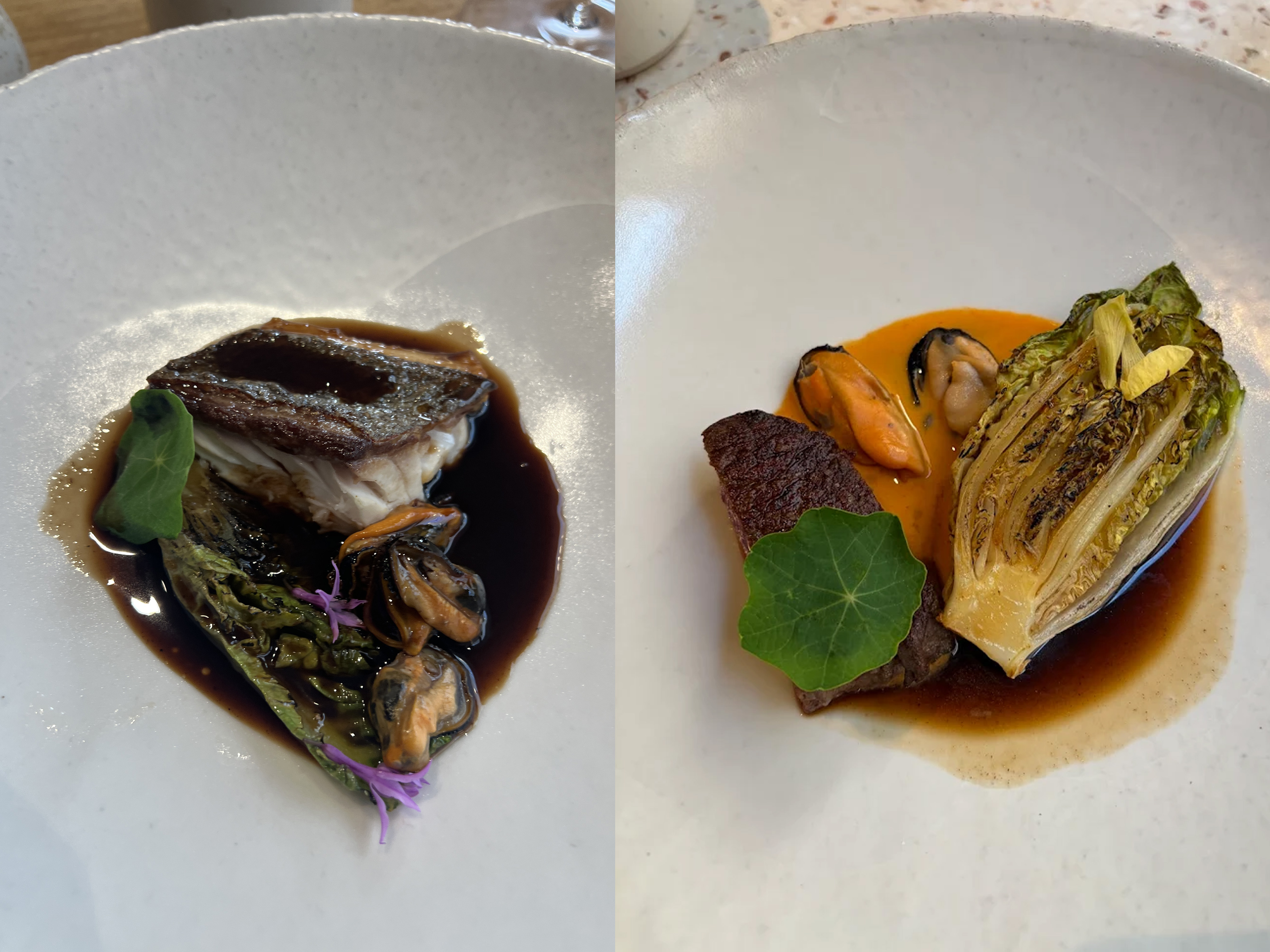
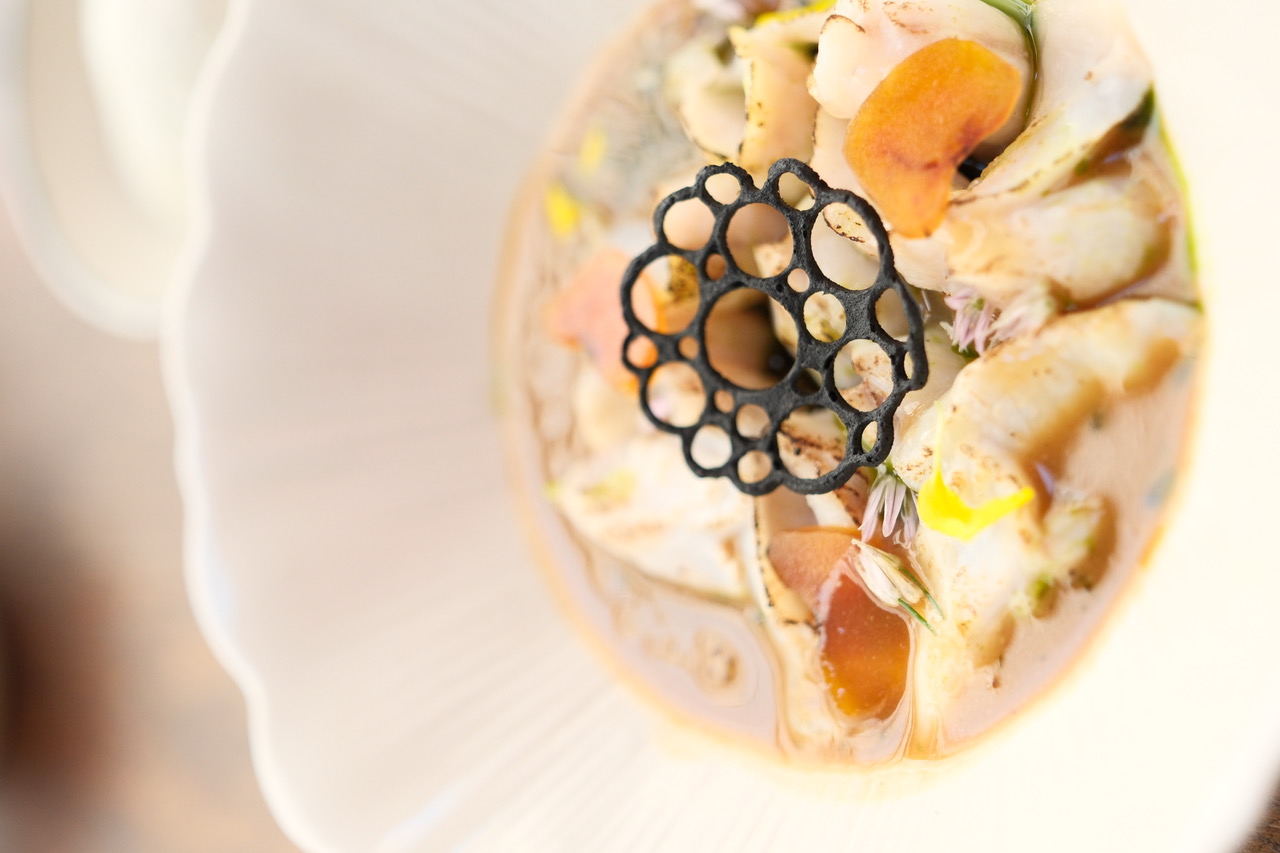
At Étude, Loïc Pétri brings sea and land together with remarkable assurance — fish, mussels, truffle and herbs in cooking that is both sophisticated and deeply comforting.
A living cuisine
There is no single new Provençal cuisine emerging from these six kitchens. There are several ways of carrying an inheritance forward.
Les Galinas safeguards recipes and the collective memory around them. La Chassagnette allows the garden to dictate the menu. Le Relais du Castelet draws from inherited land and the agriculture immediately around it. Edù embraces Provence as part of the wider Mediterranean. Le Seize takes regional ingredients into the vocabulary of a young contemporary kitchen. Étude filters place and memory through the imagination of an individual chef.
Together, they reveal how resilient a regional cuisine can be.
Provence has absorbed new ingredients for centuries. Its recipes have travelled between households and villages. Its ports have brought other Mediterranean cultures into conversation with its own. Its cooks have always responded to season, scarcity, harvest and whatever happened to be available.
That continuity remains visible today — in a bowl of aïgo boulido revived from memory, in chard gathered beneath an olive tree, in Camargue rice simmered with crab, in a garden distilled into a green sorbet, and in a piece of fish whose technique disappears by the time it reaches the table.
Tradition survives through use. Each generation inherits the ingredients, gestures and memories of the one before it, then finds its own way of putting them back on the table.