LANDSCAPE
The Hilltop Villages of Provence
By Monica D. Royce
Provence is a region of villages. Not cities, though it has remarkable ones. Not towns, though market towns have long connected the countryside to the wider world. The landscape of Provence is defined instead by its villages: compact communities of stone built on ridges, rocky outcrops and hilltops across the Luberon, the Alpilles, the Var and the limestone plateaux of the Vaucluse. Some are internationally known — Gordes, Les Baux-de-Provence, Roussillon. Others remain quieter, their beauty discovered slowly through wandering rather than reputation. Together they form one of Europe's most distinctive cultural landscapes. Their appeal is often described in aesthetic terms. Visitors speak of the honey-coloured stone, the narrow streets, the shutters and fountains, the views across vineyards and olive groves. Yet the villages were not created to be beautiful. Their beauty emerged from necessity. Understanding why these settlements exist where they do is the beginning of understanding Provence itself.
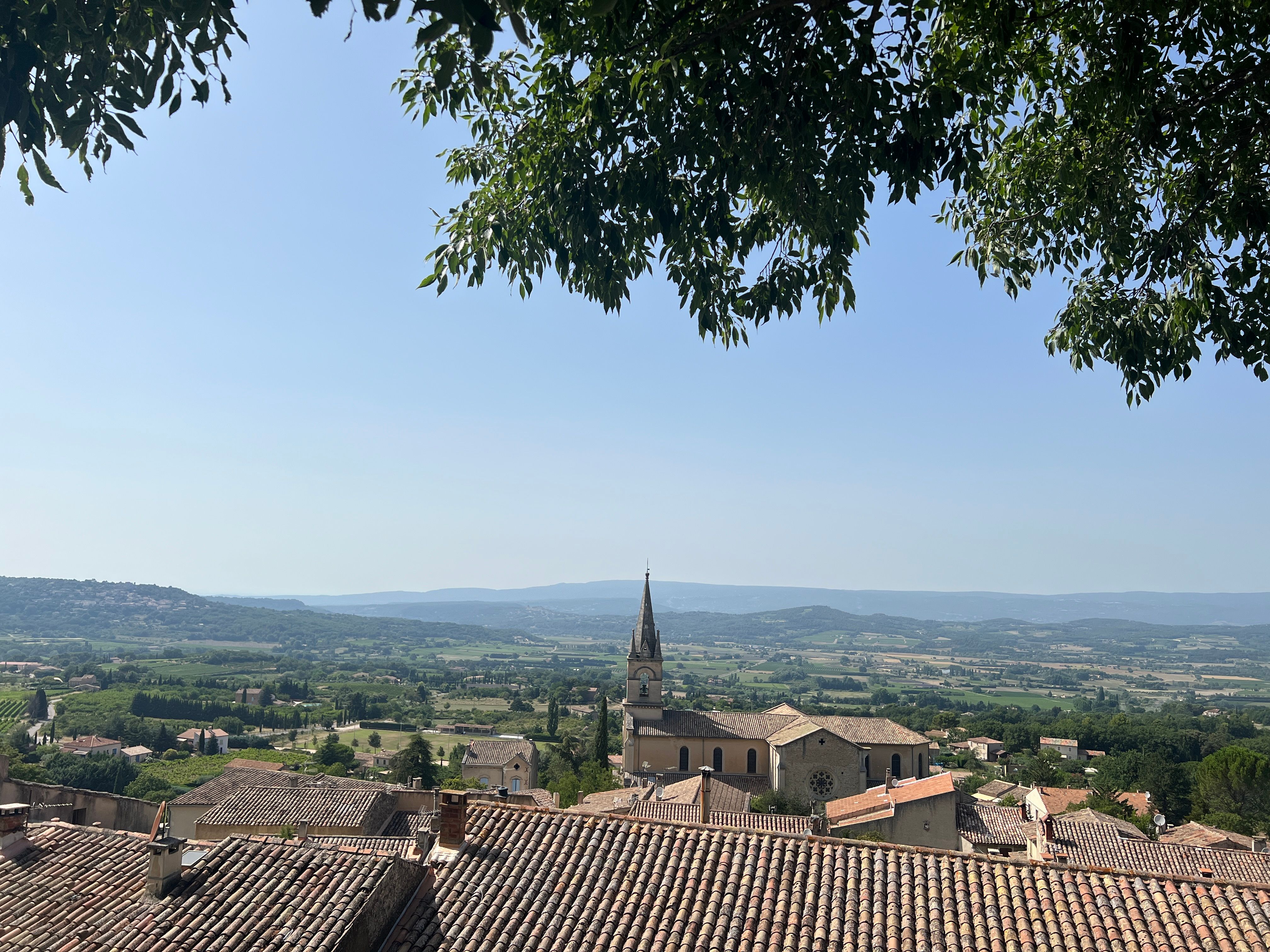
Viewed from Bonnieux, the Luberon reveals the agricultural landscape that has sustained generations of Provençal villages, from vineyards and orchards to olive groves and wheat fields.
PHOTO - NOTES EDITIONS
Building for Survival
The hilltop position was not chosen for the view. For much of the medieval period, Provence was a place of uncertainty. Rival lords fought for territory, trade routes required protection, and coastal regions faced repeated raids. Villages built on elevated ground could be defended more easily than those on open plains. Rocky spurs offered natural fortifications. Narrow entrances could be guarded. Water could be stored in cisterns cut directly into the stone. What visitors admire today as picturesque urban planning was originally practical design. The winding streets that now invite exploration helped slow attackers. Thick walls provided protection from both conflict and climate. Houses clustered tightly together to conserve space and strengthen defensive boundaries. Over time, necessity created harmony. The result is a landscape where architecture appears inseparable from the land itself.
A Grammar of Stone
The villages of Provence were built from the material beneath them. Throughout the region, local limestone was quarried directly from surrounding hillsides and shaped by generations of stonemasons. The colours vary according to geology: the pale stone of the Alpilles, the warm gold of the Luberon, the rich ochres around Roussillon. Yet the principle remains the same. The village belongs to its landscape because it is literally made from it. Traditional houses are narrow and vertical, designed to maximise limited space within village walls. Ground floors historically accommodated animals, storage and workshops, while living quarters occupied the upper levels. Roofs were covered with curved terracotta tiles whose form can be traced back to Roman construction techniques. Even today, centuries later, the visual coherence remains striking. Stone, timber, tile and landscape exist in conversation with one another.
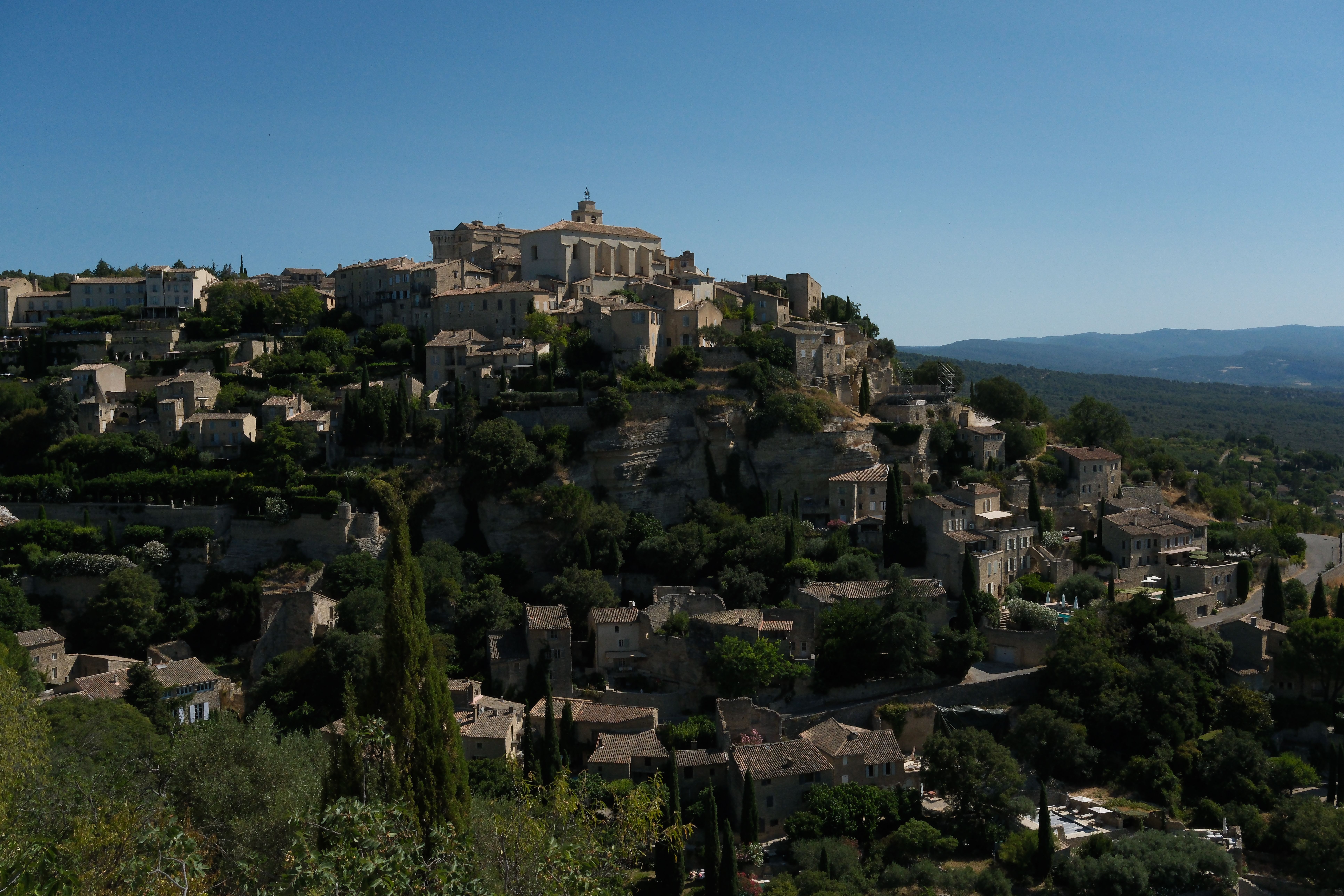
Perched above the Luberon, Gordes exemplifies the Provençal tradition of building in harmony with the landscape.
PHOTO - NOTES EDITIONS
The Village as Community
A Provençal village is more than a collection of buildings. Historically, it functioned as a complete social organism. At its centre stood the church and bell tower, marking the rhythm of daily life. Nearby stood the fountain, the essential source of water. The lavoir provided a place to wash clothes and exchange news. Bread ovens served entire communities. Market squares connected farmers, artisans and merchants from across the surrounding countryside. Many of these elements survive. The fountain still runs. The church bell still marks the hour. Weekly markets continue to animate village squares. Although daily life has changed, traces of the original structure remain visible throughout Provence. The most successful villages today are often those that have preserved not only their architecture but also their sense of community. A school, a bakery, a café and a year-round population contribute as much to the character of a village as its historic buildings.
Villages of the Luberon and Alpilles
Among Provence's most celebrated villages are Gordes, Roussillon, Ménerbes and Bonnieux in the Luberon, and Les Baux-de-Provence in the Alpilles. Each reflects a different aspect of the region. Gordes rises dramatically above the Calavon Valley, its stone houses appearing almost as an extension of the hillside. Roussillon is distinguished by the warm ochres of its former pigment quarries. Les Baux occupies one of the most dramatic defensive sites in Provence, perched on a rocky plateau with commanding views across the Alpilles. Yet some of the region's most rewarding villages are less famous. Saignon, Venasque, Séguret and Oppède-le-Vieux offer the same relationship between landscape, history and architecture, often with a slower pace and fewer visitors. The appeal of Provence lies as much in these discoveries as in its celebrated landmarks.
Living Heritage
During the second half of the twentieth century, many villages experienced a remarkable revival. Historic houses were restored, neglected buildings repaired and local heritage protected with increasing care. At the same time, success created new challenges. International demand for second homes transformed parts of the Luberon and Alpilles, raising property values and changing the social composition of many communities. The question facing many villages today is how to remain living places rather than becoming monuments to themselves. The answer varies from village to village, but the strongest communities continue to balance preservation with everyday life. Markets still take place. Children still attend local schools. Residents continue to gather in village cafés beneath the plane trees. The villages endure because they remain inhabited.
How to Experience Them
The best way to explore the villages of Provence is slowly. Rather than visiting four or five villages in a single day, choose one or two and spend time there. Walk beyond the main square. Follow the quieter lanes. Stay for lunch. Observe how the village changes throughout the day. Morning reveals daily routines. Afternoon brings the stillness of summer heat. Evening returns the squares to local life as visitors depart and residents emerge. The villages were never designed to be attractions. They were built to be lived in. Understanding that difference transforms the experience.