Notes Icon
One of the world's most extraordinary places.
Art Museum · Renaissance Masters
Uffizi Gallery
Piazzale degli Uffizi, 6, 50122 Florence FI, Italy
MuseumCollectionsArchitectureCultural InstitutionHistoricSense of Place
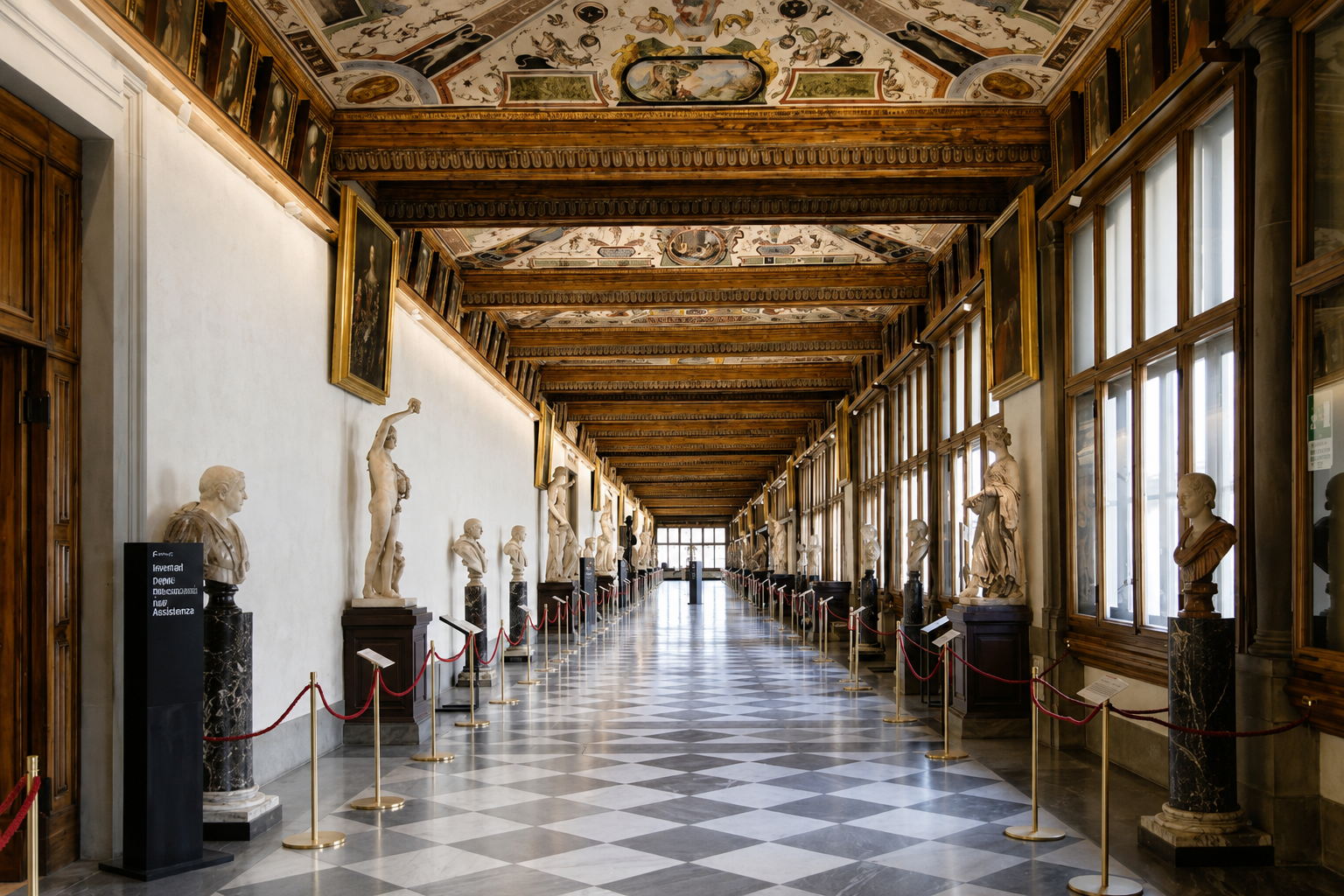
Built by Giorgio Vasari for Cosimo I de’ Medici as a seat of government offices, the Uffizi became one of Europe’s earliest public museums. Its galleries preserve the Medici family’s bequest to Florence: a collection of painting, sculpture and antiquities inseparable from the city’s Renaissance identity.
Few institutions explain Florence more completely than the Uffizi. Giorgio Vasari began the building in 1560 for Cosimo I de’ Medici, not as a museum, but as a place to consolidate the city’s administrative offices — the origin of the name “uffizi.” Completed in 1581, the structure later became the setting for the Medici family’s private gallery, where paintings, antiquities and objects of dynastic memory were displayed above the city.
The building remains part of its significance. Its long courtyard forms a deliberate urban passage between Piazza della Signoria and the Arno, framing Florence through architecture as much as through collection. Vasari inserted a sixteenth-century civic structure into the medieval city without erasing its fabric, creating one of the most recognizable architectural sequences in Florence.
The Uffizi’s survival as a public collection is owed to Anna Maria Luisa de’ Medici, the last Medici heiress, whose family pact transferred the collection to Florence on condition that it remain in the city. Opened to public viewing in the eighteenth century, the gallery preserves one of the most important collections of Florentine Renaissance painting, including defining works by Botticelli, Leonardo da Vinci, Michelangelo, Raphael and Titian. The Uffizi matters not only because of the works it contains, but because it embodies Florence’s understanding of art as civic inheritance.
— NOTES Editors, Tuscany
SaveShare
Practical Information
Uffizi Gallery
Address
Piazzale degli Uffizi, 6, 50122 Florence FI, Italy
Phone
+39 055 294 883
Website
worth knowing
Reserve tickets well in advance, particularly during spring, summer and autumn • Focus on selected masterpieces rather than attempting to see the entire collection in one visit • Early morning or late afternoon visits are generally quieter than the middle of the day • Allow time to enjoy the views over the Arno and Ponte Vecchio from the museum's upper corridors • A return visit is often more rewarding than trying to experience everything in a single day
Tuscany
View Tuscany guide
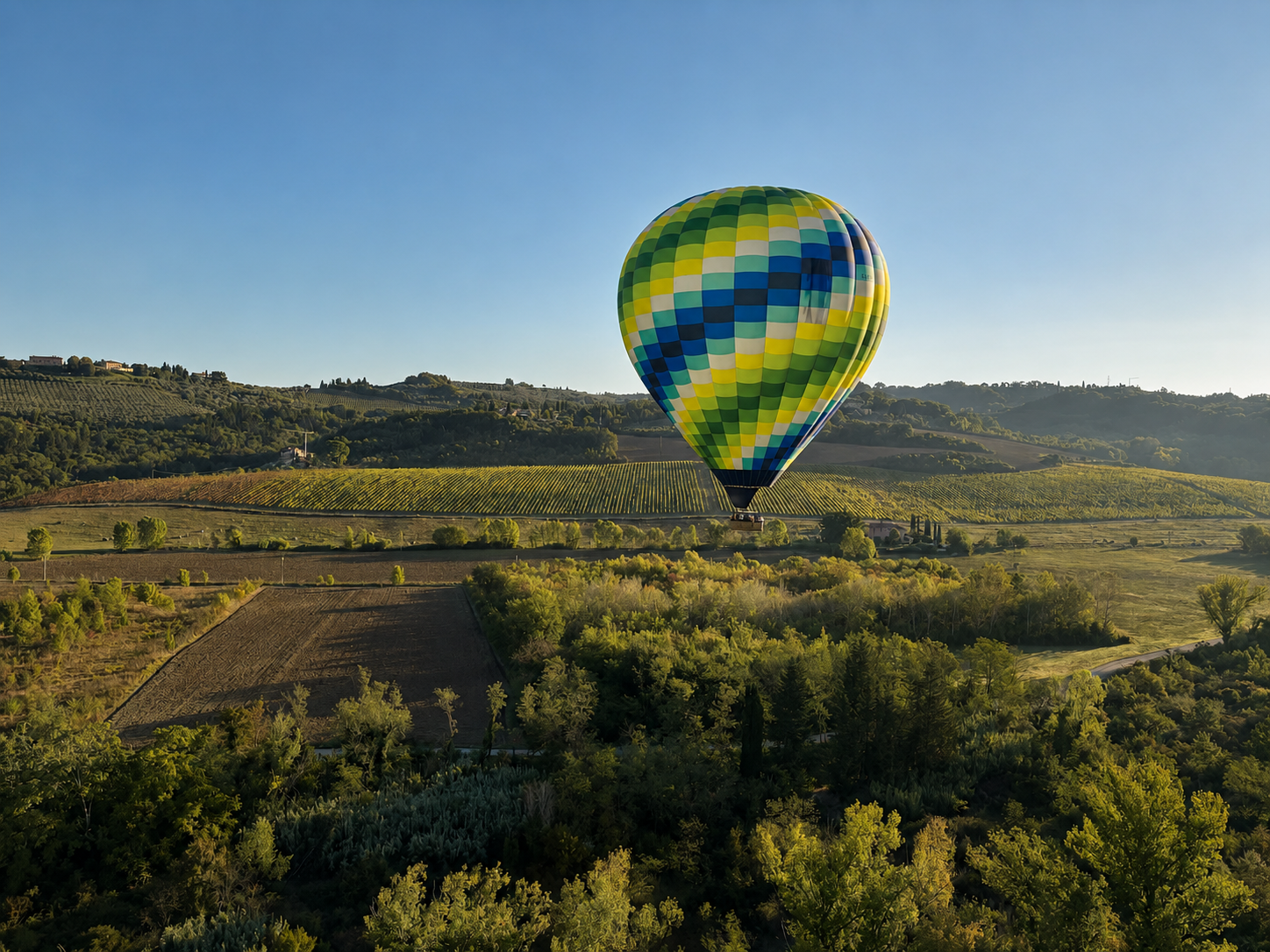
Hot air baloon · Aearial landscape
Seeing Chianti from the Sky
San Casciano in Val di Pesa, Italy
Experiences